
What is Applied Behavior Analysis (ABA)?
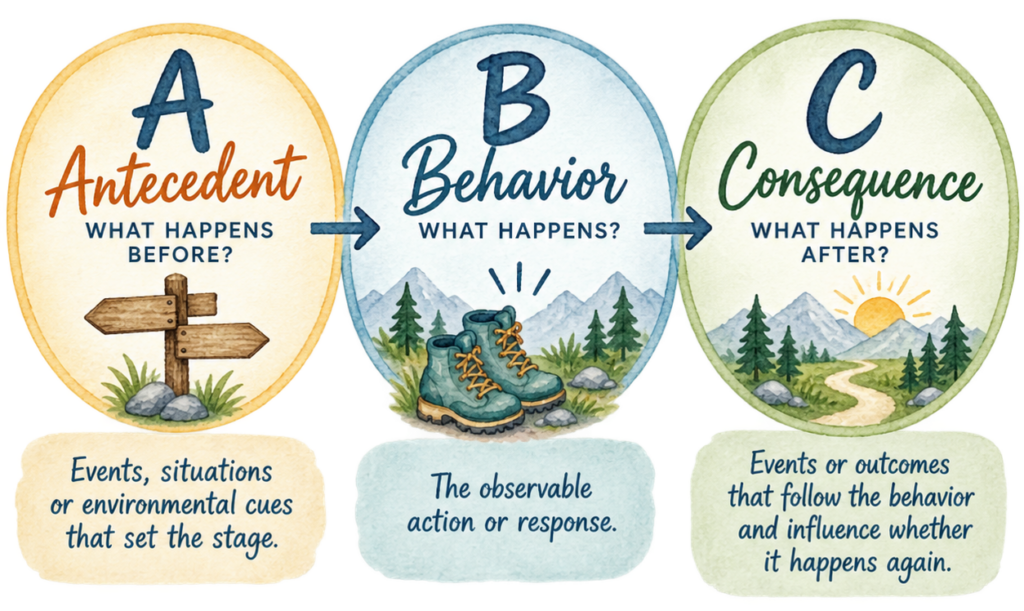
Applied Behavior Analysis (ABA) is the science of understanding behavior and the variables that influence it.
At its core, ABA asks questions like:
What is happening?
What tends to happen before this behavior?
What happens afterward?
What purpose might this behavior be serving?
What skills could make this situation easier or more successful?
How can we change the environment to support meaningful behavior?
ABA uses observable information and data to identify patterns, teach skills, evaluate whether interventions are working, and adjust when they aren’t. And behavior doesn’t happen in a vacuum. People behave within relationships, environments, learning histories, expectations, emotions, thoughts, and circumstances. Good behavioral support considers that context rather than focusing on behavior alone.
ABA isn’t just about reducing behavior.
It can be used to help people build communication, independence, self-advocacy, flexibility, coping, daily living, social, academic, vocational, and many other meaningful skills.
The question isn’t simply: “How do we get this behavior to stop?”
A more useful question is often: “What is this behavior accomplishing—and what skills or supports could help this person navigate the situation more effectively?”
What is Acceptance and Commitment Therapy (ACT)?
Acceptance and Commitment Therapy—or ACT—is a behavioral approach focused on psychological flexibility. Psychological flexibility is the ability to notice what is happening inside and around us, make room for difficult experiences when necessary, and choose behavior based on what matters rather than being controlled entirely by discomfort, habits, or rigid rules. ACT doesn’t require us to eliminate difficult thoughts or feelings before taking meaningful action.
Instead of: “I need to feel better before I can do this.”
ACT helps us practice: “This is uncomfortable—and I can still choose my next move.”
ACT commonly describes six interconnected processes:
Present-Moment Awareness — noticing what is happening right now.
Acceptance — allowing uncomfortable internal experiences without making escaping them the only goal.
Cognitive Defusion — noticing thoughts as thoughts rather than automatically treating them as facts or instructions.
Self-as-Context — developing a flexible perspective from which thoughts, feelings, and experiences can be noticed.
Values — identifying qualities and directions that matter.
Committed Action — taking meaningful steps in those directions, including when doing so is difficult.
Together, these processes support psychological flexibility.

So What Happens When We Combine ABA + ACT?
ABA gives us powerful tools for understanding what people do, the context in which behavior occurs, and the environmental variables influencing it. ACT helps us examine how language, thoughts, emotions, rules, avoidance, and values can also influence behavior. Together, they allow us to ask a bigger set of questions.
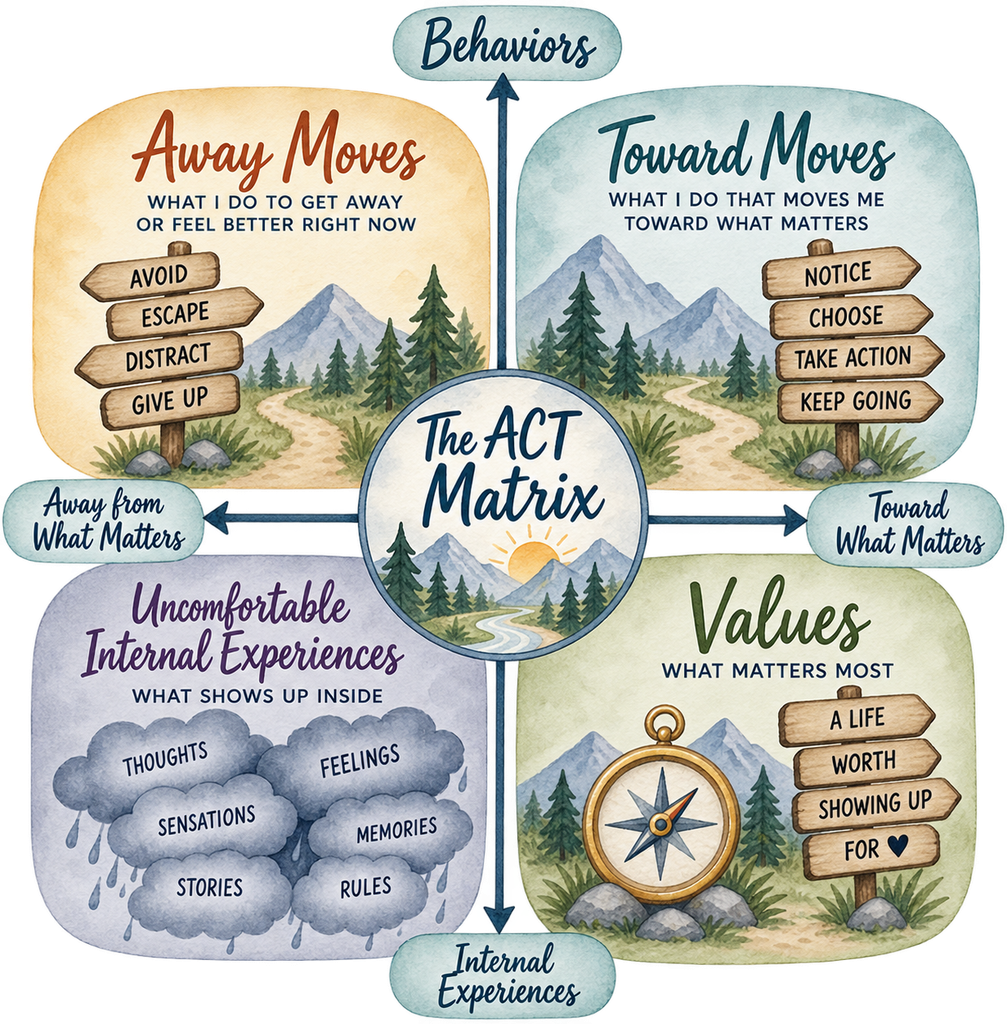
Not only: “What is reinforcing this behavior?”
But also:
“What shows up internally when this situation occurs?”
“What has this person learned about what they should or shouldn’t do?”
“Is avoiding discomfort narrowing their behavioral options?”
“What matters to this person?”
“What behavior would move them toward that—even if uncomfortable thoughts or feelings come along for the ride?”
The goal isn’t to replace behavioral principles with ACT. ACT is behavioral science. It expands the conversation by helping us consider the role of language and private events while continuing to focus on context, function, learning, and behavior.
From Behavior Reduction to Behavioral Flexibility
Sometimes a behavior is a problem because it is dangerous or significantly interferes with daily life. But sometimes the larger challenge is rigidity. A person may know what to do but struggle to do it when they are anxious, frustrated, disappointed, uncertain, or uncomfortable. Traditional ABA doesn’t provide the tools to address thoughts and emotions as barriers to doing what matters. They may become caught in rules such as:
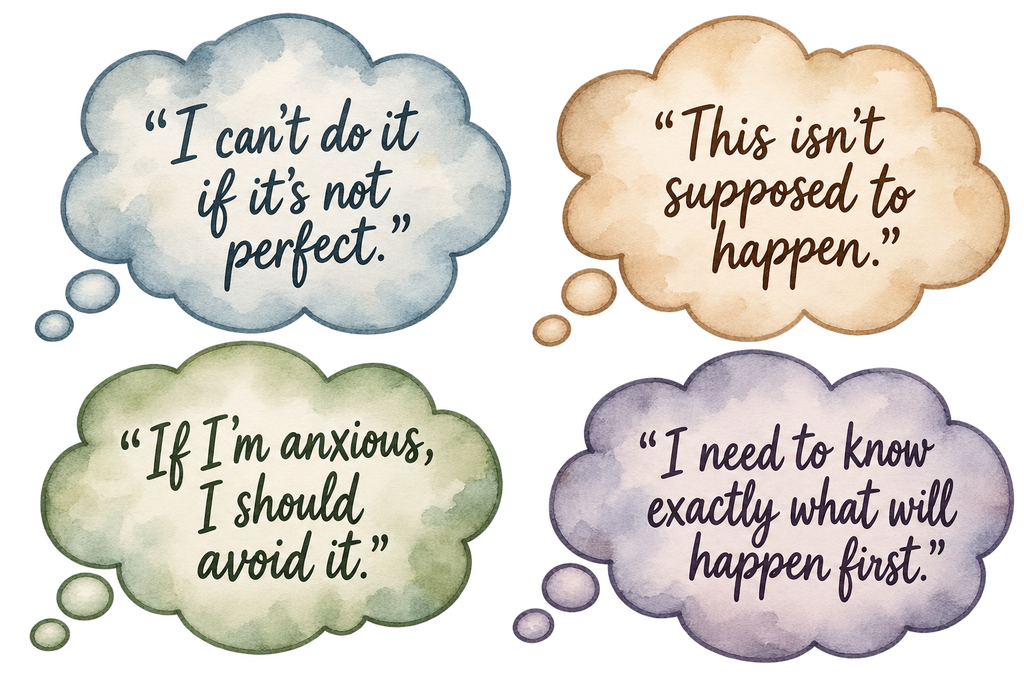
In these situations, teaching another rule isn’t always enough. We may need to help the person develop a broader, more flexible behavioral repertoire. That can mean learning to notice discomfort, communicate needs, tolerate uncertainty, ask for support, change strategies, persist when something matters, or choose a different response when the familiar one isn’t working.
What Does “Values Driven” Mean?
Values aren’t goals that we finish. They’re qualities of action that can help give behavior direction.
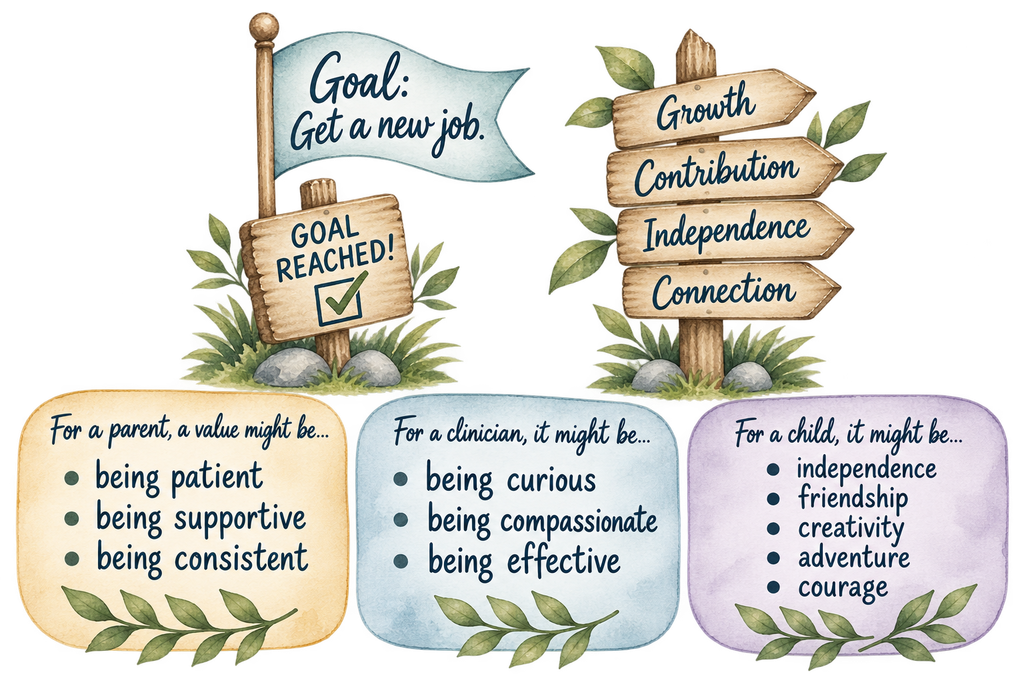
Values don’t tell us exactly what to do. They help us ask:
“Given what is happening right now and what’s important in this situation, what kind of move do I want to make?”
We All Have a Choice, Whether We Realize it or Not
One of the simplest ACT concepts is noticing whether our behavior is moving us toward or away from what matters.
Away moves aren’t “bad behavior.” They’re often understandable attempts to escape, control, or avoid something difficult. Avoiding a conversation may provide immediate relief. Giving up may end frustration. Doing something for someone may prevent a struggle. Rigidly following a rule may reduce uncertainty. Those behaviors can work very well in the short term.
The question is: Does this pattern work over time?
ACT helps us notice those patterns without judgment and build additional choices. Because sometimes the most useful intervention isn’t telling someone what they should do.
It’s helping them notice: “Here’s where I am. Here’s what is showing up. Here’s what matters. What move can I make next?”

Ready to Put It Into Practice?
If this approach sounds like something you’d like to incorporate into your work, you don’t have to figure out where to start on your own.
It’s designed to help you begin translating ACT concepts into practical, behaviorally grounded tools you can use in your work.
Ready to go deeper?
Explore the Values Driven Behavior Shop for ACT-informed ABA resources designed to support you across the clinical process—from assessment and treatment planning to intervention, caregiver support, and staff supervision.
Whether you’re just beginning to explore ACT or looking for tools to integrate it more intentionally into your existing practice, you can start where you are and build from there.
