

ACT Matrix Questions for Kids, Teens & Adults
$6.99
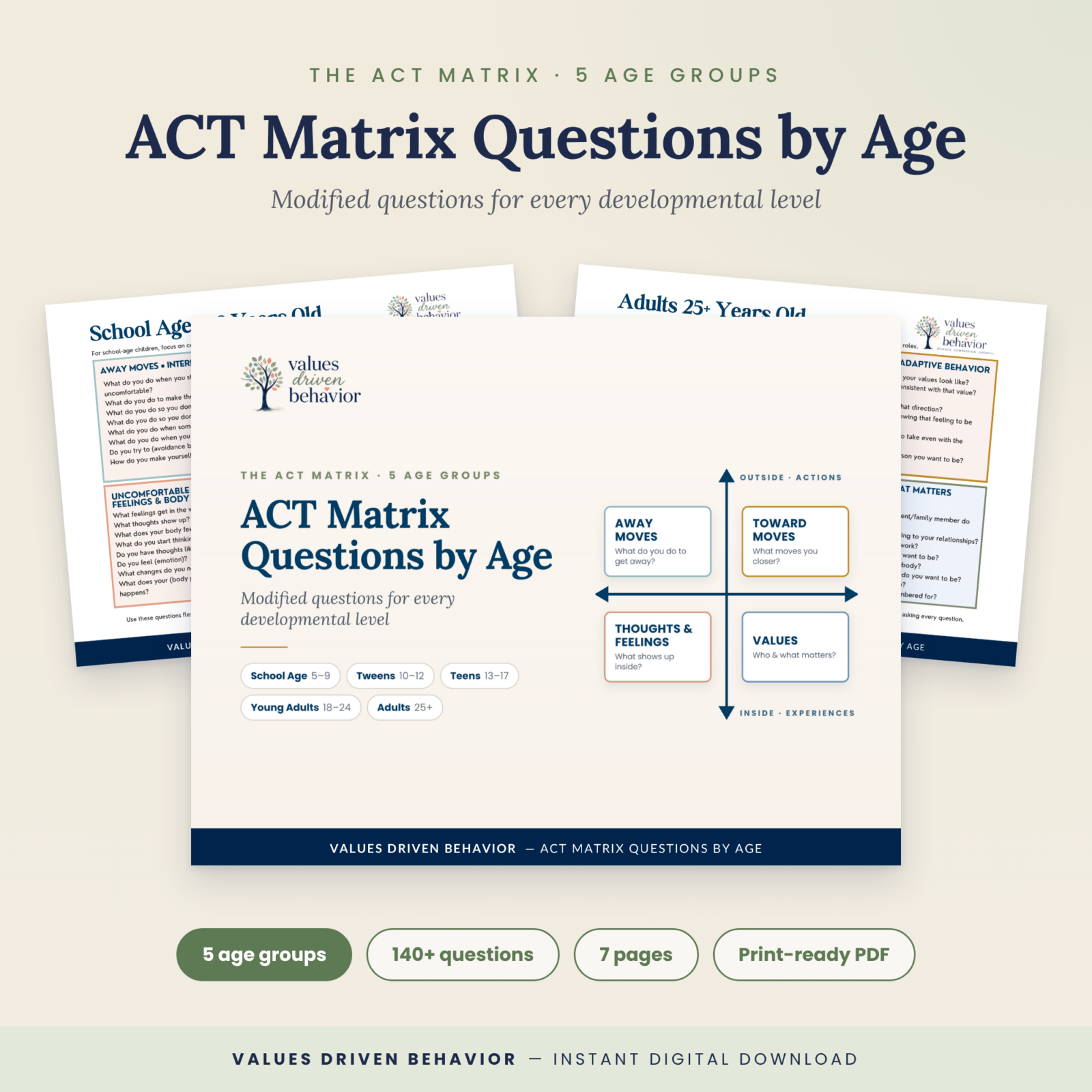
Stop using adult ACT questions with every client. Age-adapted questions for all four quadrants of the ACT Matrix, from childhood through adulthood.
Description
Stop trying to use adult ACT questions with every client.
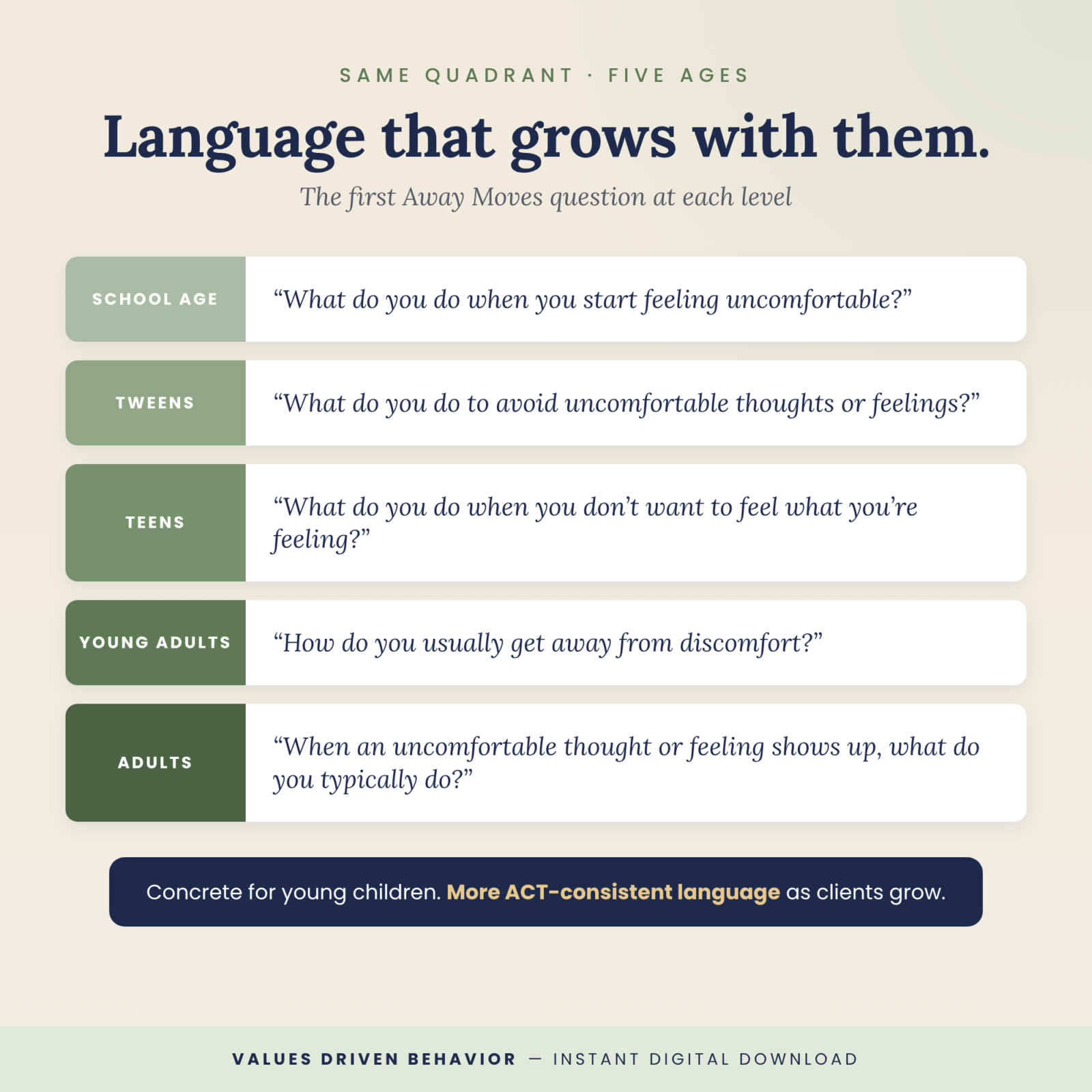
ACT concepts may stay consistent across ages—but the language, examples, and questions we use shouldn’t.
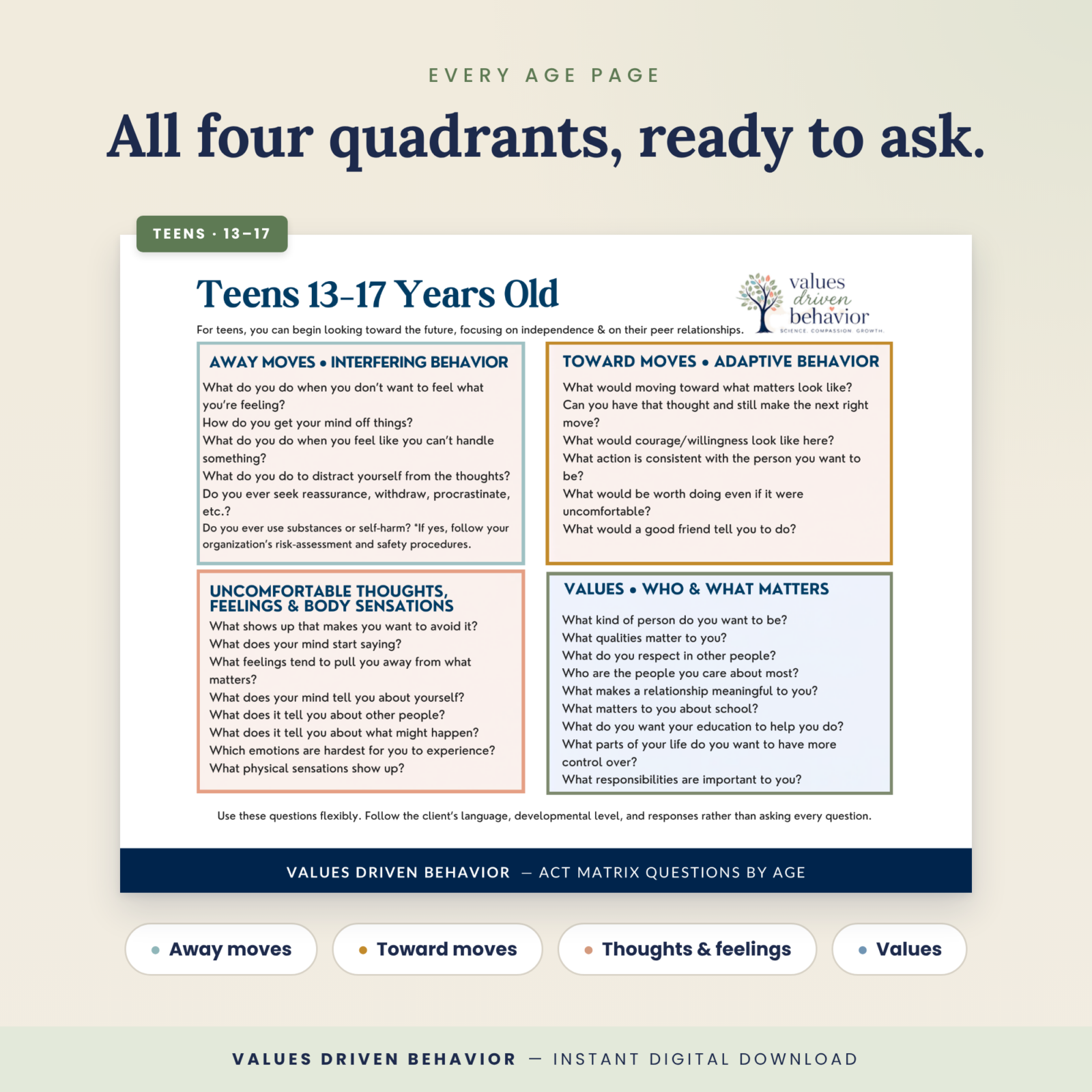
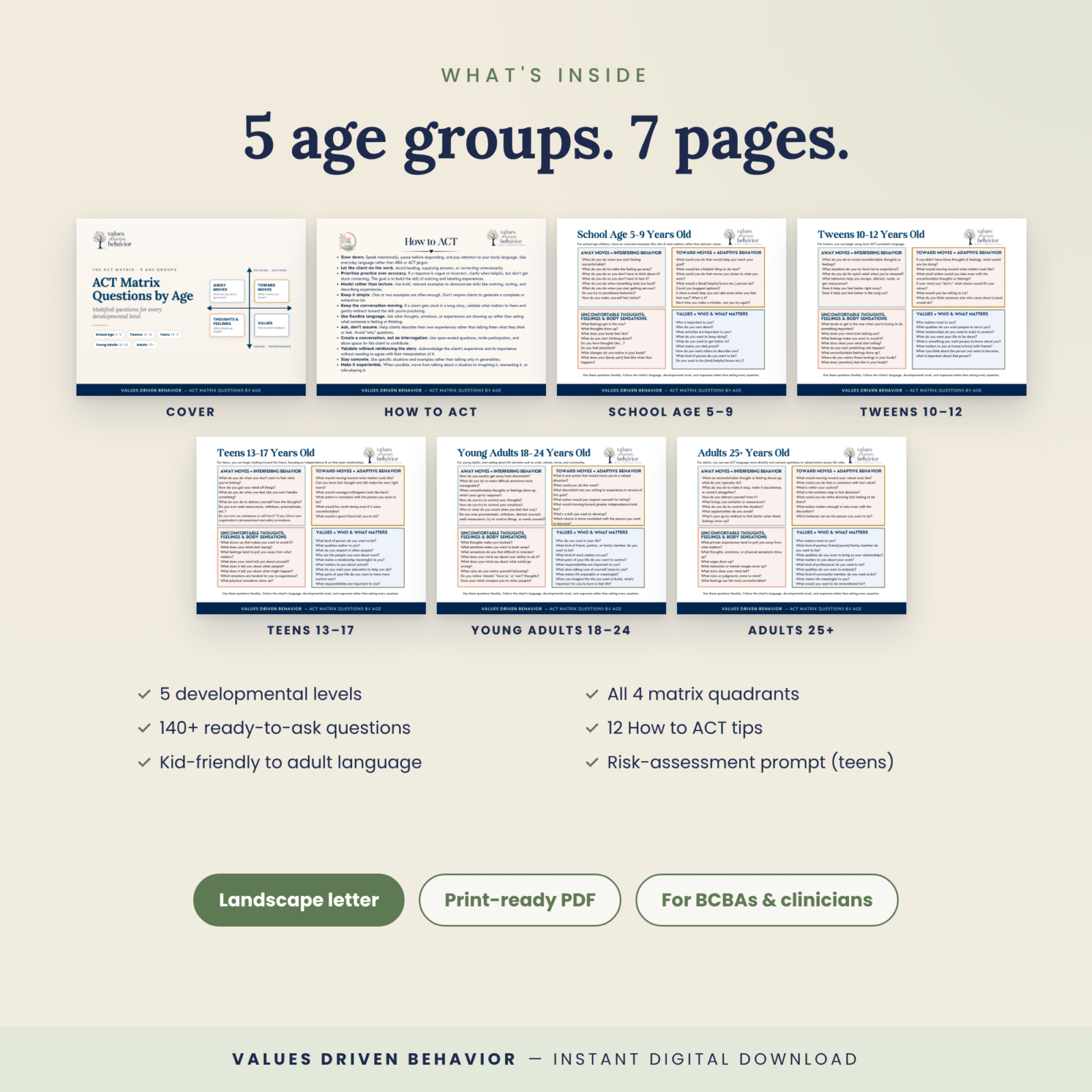
ACT Matrix Questions by Age gives clinicians developmentally modified questions for exploring all four areas of the ACT Matrix with clients from childhood through adulthood:
♥ Values — Who & What Matters
☁ Uncomfortable Thoughts, Feelings & Body Sensations
↩ Away Moves — Interfering Behavior
→ Toward Moves — Adaptive Behavior
Rather than simply giving you one long list of prompts, this resource adjusts the questions based on the client’s age and developmental level.
Want the complete set with visual matrix templates by age and values identification tools? This resource is included in the ACT Matrix Toolkit (save 25%).
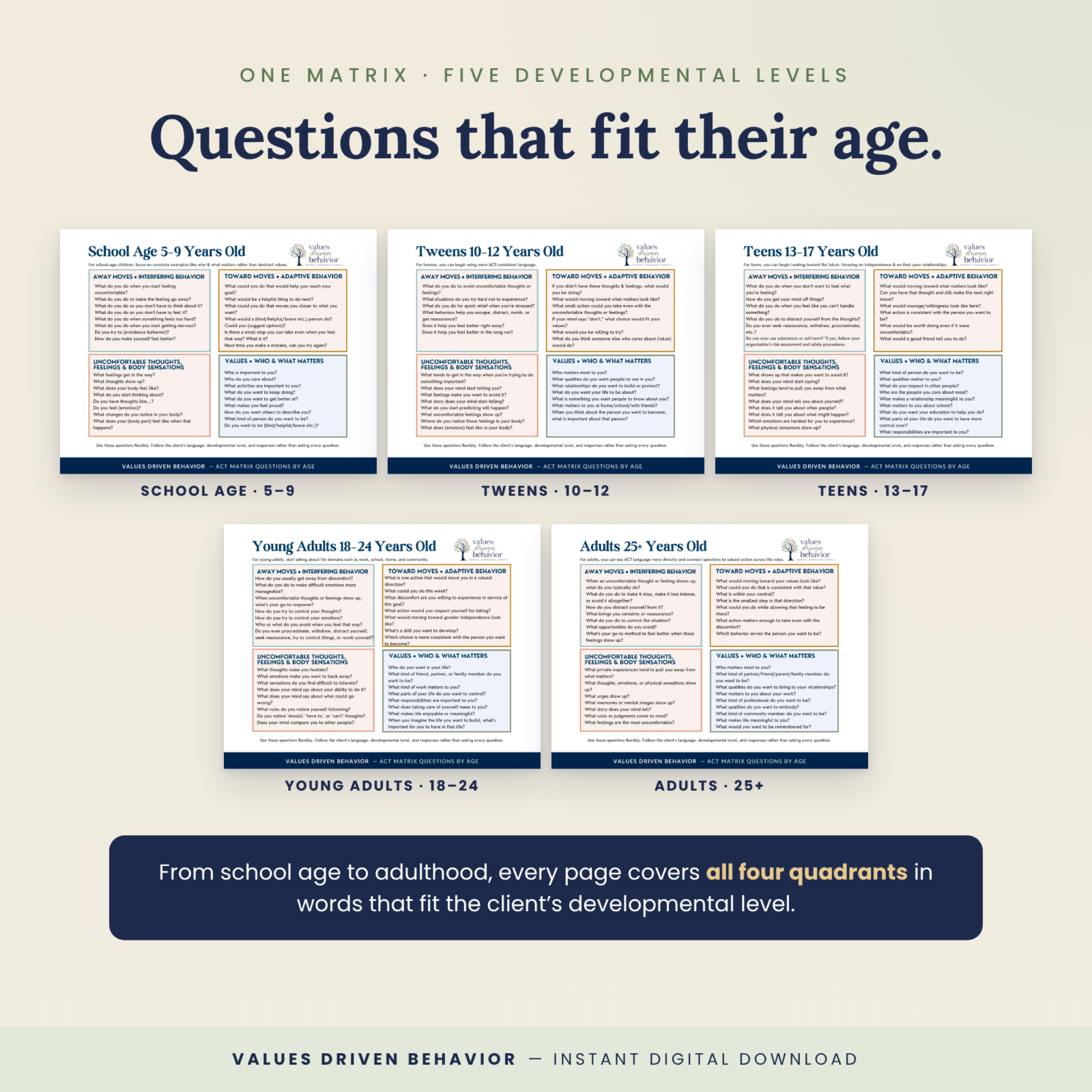
FIVE DEVELOPMENTAL LEVELS INCLUDED
School Age | 5–10
Concrete, accessible questions that minimize abstract concepts and help children talk about what matters, what feels difficult, what they do when things get uncomfortable, and helpful next steps.
Tweens | 10–13
Begins introducing more ACT-consistent language while exploring avoidance, internal experiences, relationships, identity, and values-guided choices.
Teens | 13–18
Expands conversations toward independence, peer relationships, future direction, willingness, and actions consistent with the person the teen wants to become.
Young Adults | 18–25
Explores life domains including relationships, work, school, independence, responsibilities, difficult internal experiences, and small values-consistent actions.
Adults | 25+
Uses more advanced language around private experiences, valued action, rules and judgments, relationships, work, community, meaning, and the behaviors that serve the person the client wants to be.
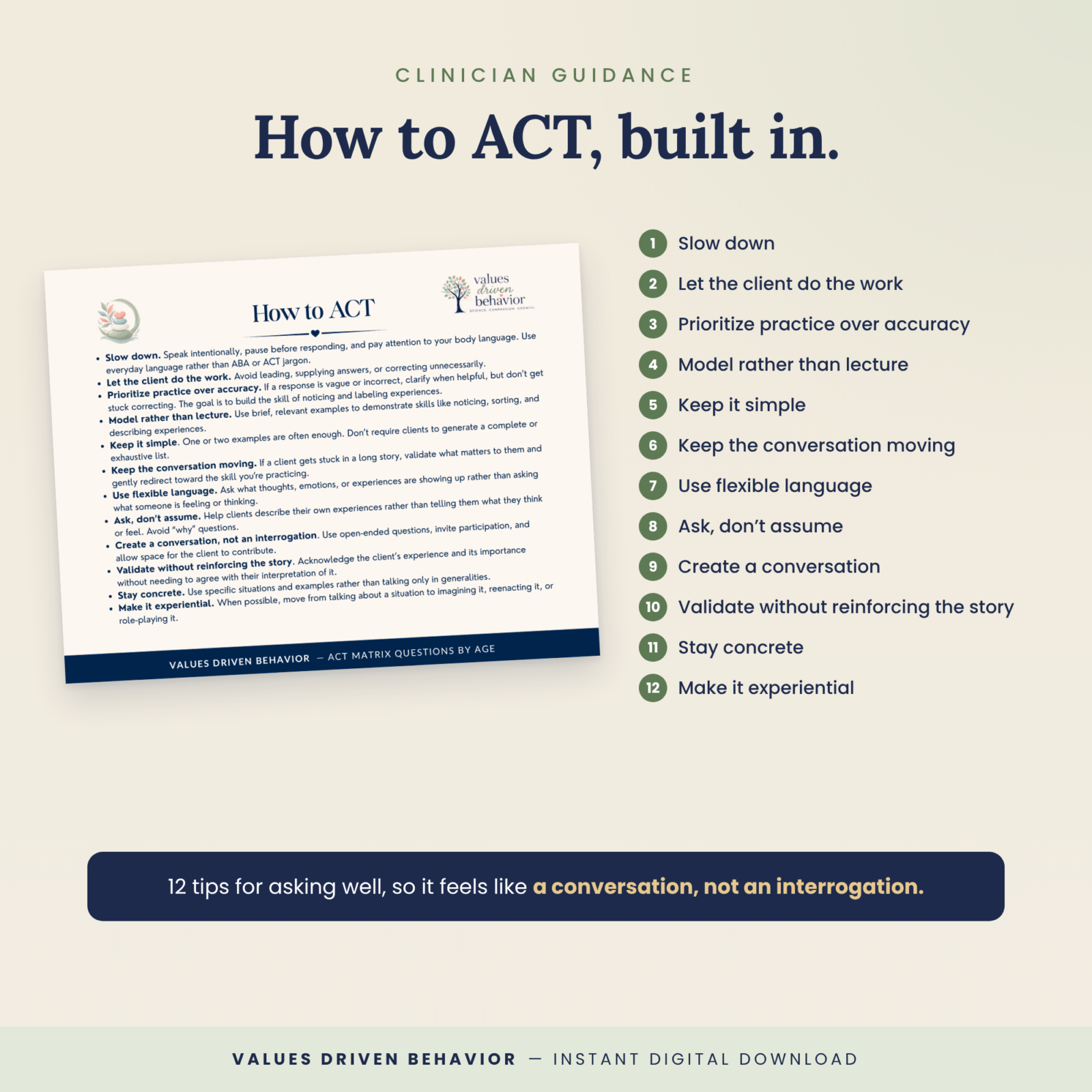
ALSO INCLUDED: “HOW TO ACT”
The resource begins with practical guidance for conducting ACT-informed conversations—including slowing down, letting the client do the work, modeling rather than lecturing, using flexible language, staying concrete, asking rather than assuming, and making interactions experiential.
DESIGNED FOR FLEXIBLE CLINICAL USE
These aren’t intended to be questions you mechanically work through from top to bottom.
Instead, clinicians are encouraged to follow the client’s language, developmental level, and responses, selecting questions that fit the interaction.
Use them during:
• ACT Matrix conversations
• ACT-informed ABA sessions
• Assessment and treatment planning
• Values exploration
• Parent/caregiver training
• Skill-building sessions
• BCBA supervision and training
• Counseling and therapeutic conversations
Ideal for BCBAs, behavior analysts, ACT-informed clinicians, therapists, counselors, educators, school-based professionals, and other practitioners supporting values-driven behavior change.
DIGITAL DOWNLOAD
Printable PDF digital resource. No physical item will be shipped.
Created by a Board Certified Behavior Analyst through Values Driven Behavior — Resources for Doing What Matters.

Reviews
There are no reviews yet.